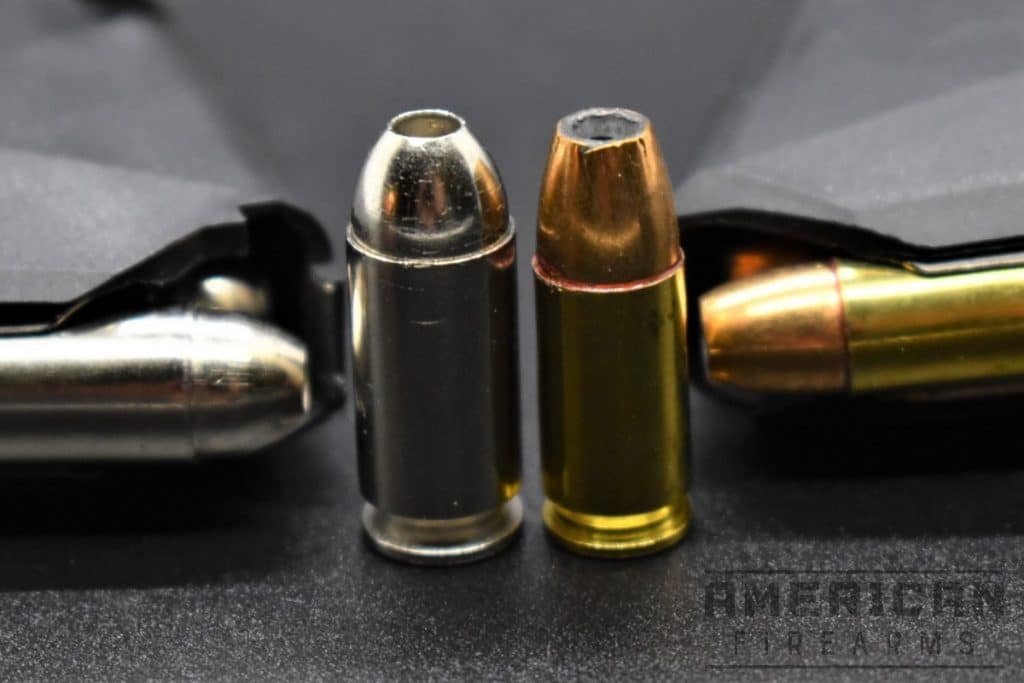
April 11, 1986. Pinecrest, Florida. Two bank robbers — William Platt and Michael Matix — are stopped by eight FBI agents in a residential neighborhood, and what follows is four minutes and eighteen seconds that will reshape American handgun culture for the next three decades.
Platt and Matix are killed in the firefight. So are Special Agents Gerald Dove and Benjamin Grogan. Five other agents are wounded, several critically. The exchange of gunfire produces 145 rounds, 12 gunshot wounds on the two suspects, and one finding that will outlast everything else in the official post-shooting analysis: Special Agent Dove fired a .38 Special +P 158-grain semi-jacketed hollow point that struck Platt in the right arm, transited the limb, entered the chest cavity, collapsed the right lung, and nicked the heart.
Penetration into the thoracic cavity: approximately 1.9 inches. Not enough to reach the major blood vessels. A wound that would have been fatal within minutes proved insufficient to stop a man who, despite it, retrieved his rifle and killed two federal agents before finally succumbing.
The FBI characterized this as a penetration failure. They were right. What they did next is where the story gets complicated.
The institutional conclusion was to change the caliber. The FBI’s own Ballistic Research Facility, working in the same building, at roughly the same time, had reached a different conclusion: that caliber was the wrong variable to optimize. Their findings went into a report published in 1989. The .40 S&W went into production in 1990. The ammunition industry spent the next thirty years hoping you’d read the second document and not the first.
The thirty-year debate between 9mm, .45 ACP, and .40 S&W as defensive calibers was sustained by marketing rather than ballistic evidence — evidence the FBI’s own researchers had compiled before the debate formally began.

By Michael Crites
Michael Crites has served as executive editor of AmericanFirearms.org since 2016 and previously held positions as associate editor and range correspondent dating back to 2000. He discovered his passion for precision shooting at age 12 during his first visit to his grandfather's shooting range, eventually earning an Expert classification in three different shooting disciplines before age 18.
During his studies at University of Wyoming, he earned four varsity letters on the collegiate rifle and pistol teams, serving as team captain for three consecutive years. He became the first UW student to complete the NRA Range Safety Officer certification while maintaining full-time student status. He graduated magna cum laude with a B.A. in Sports Communications.
His diverse career has included roles as Range Safety Coordinator for the National Rifle Championships in Camp Perry 2001; editor-in-chief, Precision Shooter Quarterly; series editor, Modern Firearms Handbook collection; managing editor, National Shooting Sports Foundation Newsletter; editor, Competitive Shooter Magazine; operations director for Western Arms & Ammunition Co.; senior editor for the Shooter's Reference Annual (Cheyenne); content director for The Firearms Report, published by the American Shooting Coalition in Billings, MT; firearms correspondent for Hunting & Shooting, produced by Outdoor Sports Media Group in Jackson, WY; and publisher for Wyoming Shooting Sports Journal in Casper. He has contributed as a regular columnist for American Rifleman (NRA Publications), technical editor for Precision, a publication of the National Bench Rest Shooters Association (Phoenix, AZ); and as firearms specialist for the Gun Owner's Annual.
As a digital content creator, he has written more than 400 articles on AmericanFirearms.org, developed shooting technique coverage for the Brownells Shooting Blog (Montezuma, IA) and Federal Premium "Range Notes" platform (Anoka, MN), and served as lead content strategist for International Defensive Pistol Association (Berryville, AR). Beyond Tactical Firearms, his current endeavors include content development for the Wyoming State Rifle Association (Cheyenne, WY) and technical manual production for High Plains Publishing of Laramie, WY.
He has contributed to the 12th, 13th, and 14th editions of Modern Sporting Rifles Guide and edited The Complete Guide to Tactical Shooting and Competitive Shooter's Reference Manual (Gun Digest Books).
View all of Michael Crites's posts.